
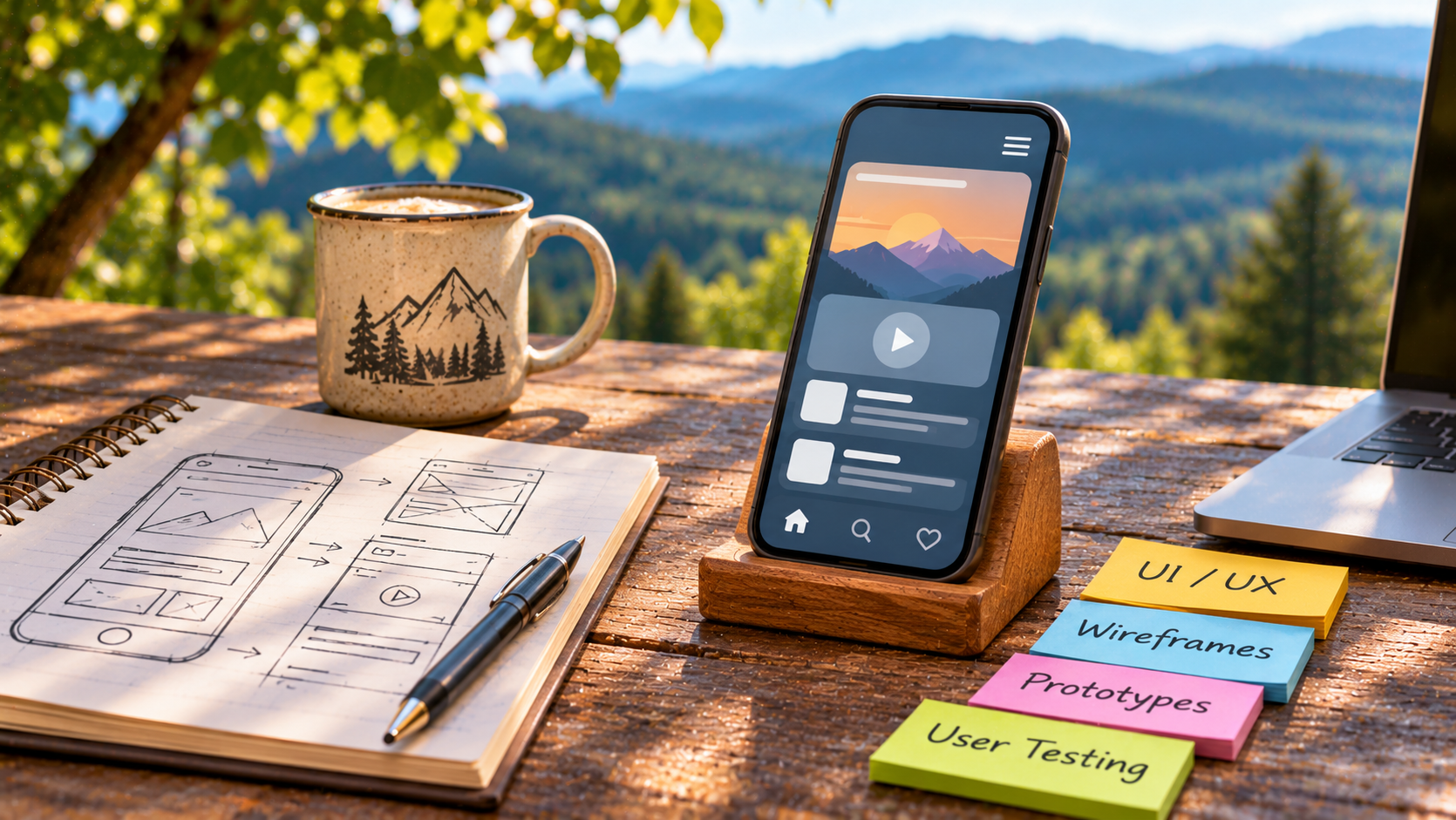
Make your mobile app easier to understand and use. We help you translate customer needs into clear navigation, practical workflows, and interfaces that support the tasks users came to complete.
Mobile App Design Overview
Mobile App Design is the process of planning and creating the visual appearance, structure, and user experience of applications designed for smartphones, tablets, and other mobile devices. It combines visual design with an understanding of how people interact with technology to create applications that are functional, intuitive, accessible, and engaging.
Mobile applications often provide users with direct access to services, information, entertainment, and business functionality. Because these interactions occur on relatively small screens, thoughtful design plays an important role in helping people accomplish their goals without unnecessary confusion. Clear layouts, understandable navigation, and well-organized features can make the difference between an application that feels natural to use and one that creates frustration.
User Interface (UI) design focuses on the visual and interactive elements of an application. This includes buttons, icons, typography, colors, spacing, layouts, and other components that users see and interact with. A consistent interface helps people recognize available actions, understand information, and move through an application more comfortably.
User Experience (UX) design considers the broader experience of using an application. It involves understanding the needs, expectations, and behaviors of the intended audience and designing interactions that allow users to accomplish tasks efficiently. This may include simplifying account creation, improving navigation, reducing unnecessary steps, or making important features easier to discover.
Wireframing and prototyping are important parts of the design process. Wireframes outline the structure and organization of screens, while prototypes provide a more interactive representation of how an application may function. These tools allow designers, developers, and stakeholders to evaluate ideas, explore alternatives, and identify potential problems before committing to full implementation.
Mobile app design must also consider the differences between devices and operating systems. Screen sizes, orientations, interaction patterns, and platform conventions can influence how an application should be organized. Responsive and adaptive layouts help ensure that interfaces remain functional and understandable across the devices they are intended to support.
Usability testing provides valuable insight into how people actually interact with an application. Observing users, collecting feedback, and evaluating where difficulties occur can reveal problems that may not be apparent during initial design. These findings help teams refine navigation, improve interactions, and make the overall experience more effective.
Design also influences customer engagement and retention. Applications that are confusing, difficult to navigate, or visually inconsistent may discourage continued use even when they offer valuable functionality. Thoughtful design helps communicate a product’s value, establish familiarity, and create experiences that encourage users to return.
AspirationalX approaches mobile app design by connecting user needs, product strategy, visual organization, and technical implementation. We consider how an application should support its intended audience, how individual features relate to the overall experience, and how design decisions influence development, usability, and future improvements.
The goal is to create mobile experiences that are visually coherent, easy to understand, and practical to use while supporting customer satisfaction and long-term product value.
Typical Use Cases for Mobile App Design
- Mobile User Interface (UI) Design — Develop visual elements, layouts, buttons, icons, typography, and interface components that create consistent and understandable mobile applications.
- Mobile User Experience (UX) Design — Plan how users interact with an application to make navigation, workflows, and important actions intuitive and efficient.
- Mobile App Wireframing — Create simplified screen layouts that establish the structure, content organization, and functionality of an application before detailed design begins.
- Interactive Prototyping & Concept Validation — Develop interactive representations of proposed application experiences to evaluate navigation, functionality, and design approaches before development.
- Mobile Navigation & Information Architecture — Organize application screens, menus, features, and content so users can locate information and complete tasks easily.
- Responsive & Adaptive Mobile Layouts — Design interfaces that accommodate different screen sizes, orientations, and device capabilities while maintaining usability and consistency.
- Mobile Usability Testing & Evaluation — Observe user interactions and gather feedback to identify confusing workflows, design limitations, and opportunities for improvement.
- Mobile Onboarding & Account Experience Design — Create clear processes for account registration, initial setup, user guidance, and introduction to important application features.
- Mobile Interaction & Workflow Optimization — Simplify multi-step activities such as purchases, form completion, information entry, and navigation to reduce unnecessary friction.
- Mobile Application Visual Design Systems — Establish consistent colors, typography, components, spacing, and interaction patterns that support a recognizable application experience.
- Mobile Accessibility & Inclusive Design — Consider readability, contrast, touch-target sizing, navigation, and other accessibility requirements when creating interfaces for diverse users.
- Mobile Gaming & Interactive Experience Design — Plan engaging visual interfaces, controls, gameplay interactions, and user experiences for mobile games and entertainment applications.
- Mobile App Redesign & Usability Improvement — Evaluate existing applications and refine their visual appearance, navigation, organization, and interactions based on user needs and feedback.
- Mobile Product Design & Development Collaboration — Coordinate design decisions with product managers, developers, and other stakeholders to support practical implementation and consistent product experiences.
Our Expertise with Mobile App Design
AspirationalX brings together mobile product development, software engineering, data analytics, product strategy, and business operations perspectives to support the design of practical and engaging mobile applications. Our approach considers both the experience customers have when using an application and the technical and business requirements that influence how the product is developed.
Our experience includes founding and managing mobile application and gaming initiatives involving a portfolio of more than 20 mobile gaming applications. This work provides perspective on the relationship between application design, user engagement, product functionality, and ongoing development. It also informs how interface decisions can influence customer behavior and the overall success of a mobile product.
We recognize that effective design begins with understanding the intended audience and the actions users need to accomplish. Different applications serve different purposes, from entertainment and communication to productivity and specialized business activities. We consider these objectives when evaluating how features should be organized, which interactions matter most, and how the experience can remain approachable for its intended users.
Our approach emphasizes the relationship between design and functionality. A visually appealing application must also provide clear navigation, understandable controls, and interactions that behave as expected. We consider how visual elements, screen layouts, and workflows support the practical activities users want to complete rather than treating appearance as a separate concern.
Our broader software engineering experience provides perspective on how design decisions affect implementation. Interface features may depend on APIs, backend services, databases, device capabilities, or other technical systems. We consider these relationships when evaluating design approaches so that proposed experiences are practical to develop, maintain, and improve.
We also understand the value of iterative product improvement. Initial design assumptions may not fully reflect how customers interact with an application once it is in use. Our experience with user engagement analysis, product development, and ongoing feature refinement informs an approach that considers customer feedback, usage patterns, and observed difficulties when identifying opportunities for improvement.
Mobile applications also operate within different technical and platform environments. Apple’s iOS and Google’s Android platforms have their own interface conventions, accessibility considerations, and device behaviors. We consider these differences when planning experiences that should feel consistent and understandable while respecting the expectations of each platform.
Our experience with mobile gaming and interactive applications provides additional perspective on engagement-focused design. Visual feedback, intuitive controls, clear progression, and well-organized interactions can influence how comfortable users feel and whether they continue using a product. We consider these principles when evaluating how applications communicate information and encourage meaningful interaction.
We recognize that mobile app design is most effective when it connects with broader product objectives. Customer acquisition, retention, monetization, accessibility, and long-term development priorities may all influence design decisions. Our multidisciplinary approach helps consider these factors together rather than evaluating individual interface elements in isolation.
Our focus is on helping organizations create mobile applications that combine thoughtful design, dependable functionality, and meaningful user experiences while supporting practical development and continued product improvement.